

Cornmeal Pancakes Recipe
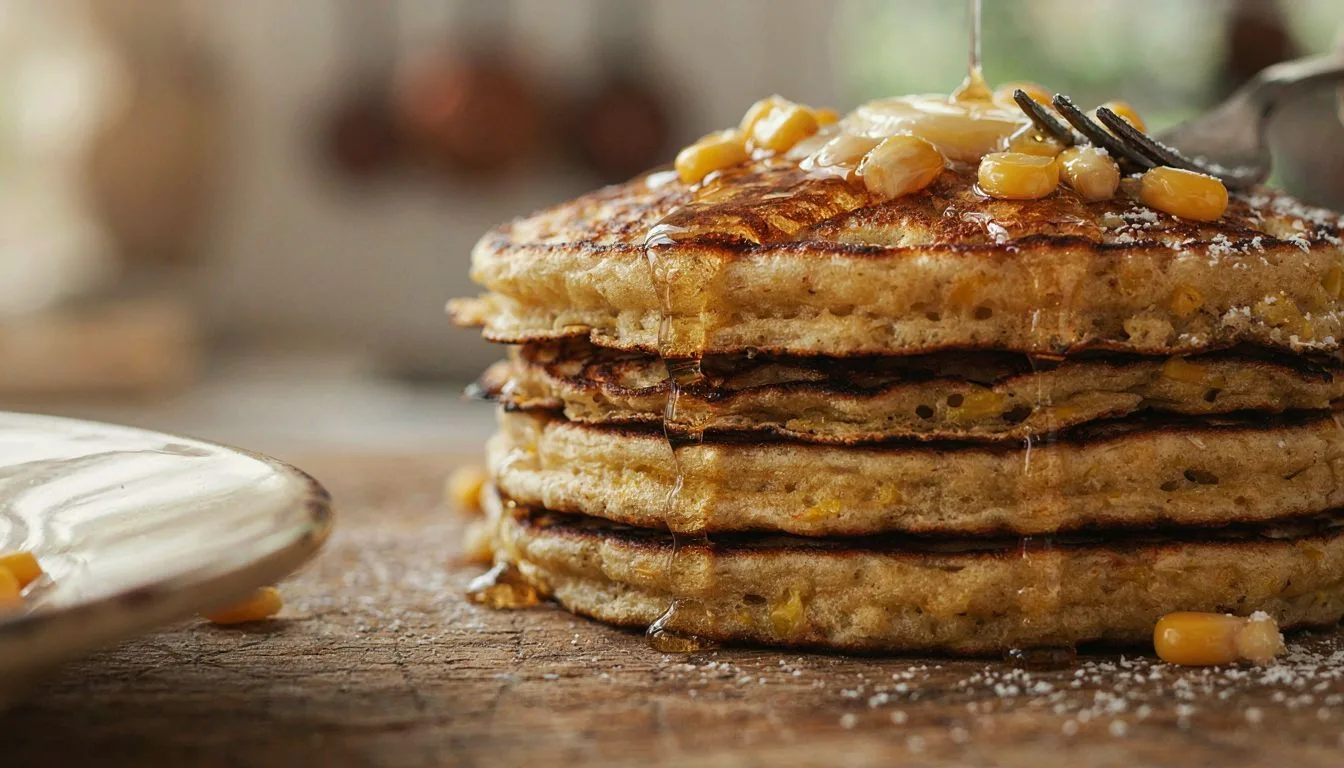
Make fluffy Cornmeal Pancakes with a golden, crispy edge and tender center. This easy recipe delivers delicious breakfasts with simple ingredients in just minutes.
Preparation
10 min
Cooking
15 min
Difficulty
Easy
Servings
4 servings
These cornmeal pancakes are crisp around the edges, tender in the center, and have a comforting, golden flavor. The cornmeal adds subtle sweetness and a hearty texture, while a simple batter keeps the recipe easy enough for busy mornings. Serve them warm with butter, maple syrup, fresh berries, or a savory topping for a satisfying breakfast everyone will enjoy.
Origins and History of the Dish
Cornmeal pancakes are a comforting variation on traditional pancakes, valued for their golden color, crisp edges, and subtly sweet, earthy flavor. Their history is closely connected to Indigenous North American cooking, where ground corn was a vital staple long before wheat became widely available. European settlers adopted cornmeal techniques and gradually combined them with familiar ingredients such as milk, eggs, and leavening agents, creating regional pancake styles that remain popular today.
Unlike standard flour pancakes, cornmeal pancakes have a pleasantly grainy texture and a more distinctive taste. Some recipes use finely ground cornmeal for a tender result, while others prefer a coarse grind for extra character. Buttermilk is often added to bring gentle tanginess and help soften the cornmeal, while baking powder or baking soda provides lift. The batter may also include a little flour to improve structure without overpowering the corn flavor.
These pancakes are versatile enough for breakfast, brunch, or a rustic side dish. Serve them with maple syrup, honey, fresh berries, or butter for a sweet meal. For a savory approach, pair them with eggs, cheese, roasted vegetables, or smoked meat. Resting the batter briefly before cooking allows the cornmeal to hydrate, producing softer, more evenly cooked pancakes.
Ingredients
✓1 cup yellow cornmeal
✓1 cup all-purpose flour
✓2 tablespoons granulated sugar
✓2 teaspoons baking powder
✓1/2 teaspoon baking soda
✓1/2 teaspoon fine salt
✓1 1/2 cups buttermilk
✓2 large eggs
✓3 tablespoons unsalted butter, melted
✓1 teaspoon vanilla extract
✓Butter or neutral oil, for cooking
Instructions
1
In a large mixing bowl, whisk together 1 cup of yellow cornmeal, 1 cup of all-purpose flour, 2 tablespoons of granulated sugar, 2 teaspoons of baking powder, ½ teaspoon of baking soda, and ½ teaspoon of salt. Mixing the dry ingredients first helps distribute the leavening agents evenly.
2
In a separate bowl, whisk 1 ¼ cups of buttermilk, 2 large eggs, 3 tablespoons of melted unsalted butter, and 1 teaspoon of vanilla extract until smooth. Let the melted butter cool slightly before adding it so it does not cook the eggs.
3
Pour the wet ingredients into the dry ingredients. Stir gently with a whisk or spatula just until combined. A few small lumps are perfectly fine; avoid overmixing, which can make the pancakes dense instead of tender.
4
Allow the batter to rest for 5–10 minutes. This gives the cornmeal time to absorb moisture and produces softer, more flavorful pancakes with a pleasant texture.
5
Heat a nonstick skillet or griddle over medium heat. Lightly grease it with butter or cooking spray. The pan is ready when a small drop of water sizzles gently on the surface, but does not evaporate immediately.
6
Pour approximately ¼ cup of batter onto the hot skillet for each pancake. Cook for 2–3 minutes, or until bubbles form on the surface and the edges look set. Keep the heat at medium so the cornmeal pancakes brown evenly without burning.
7
Carefully flip each pancake and cook for another 1–2 minutes, until golden brown and fully cooked in the center. Avoid pressing down on the pancakes, as this can remove the air that makes them light.
8
Transfer the finished pancakes to a plate and serve immediately with butter, maple syrup, fresh berries, or your favorite toppings. For the best texture, serve them warm while the edges are crisp and the centers are tender.
Tips and Serving Suggestions
- Let the batter rest for 5 to 10 minutes before cooking. This gives the cornmeal time to hydrate and creates a more tender texture.
- Do not overmix the batter. A few small lumps are perfectly fine and help keep the pancakes light rather than dense.
- Use medium heat for the best results. Cornmeal pancakes can brown quickly, so cooking them over high heat may leave the centers undercooked.
- Grease the pan lightly between batches with butter or neutral oil. Too much fat can make the edges greasy instead of crisp.
- Flip the pancakes when bubbles appear on the surface and the edges look set. They should release easily from the pan without tearing.
- Keep cooked pancakes warm on a baking sheet in a low oven, loosely covered with foil. Avoid stacking them tightly, as trapped steam can soften the edges.
- Serve them with butter and warm maple syrup for a classic breakfast, or add fresh berries, sliced bananas, and a spoonful of yogurt for a lighter option.
- For a savory variation, reduce the sweetener and serve the pancakes with fried eggs, crispy bacon, sautéed greens, or a dollop of sour cream.
İlginizi Çekebilecek Diğer Konular



Subscribe
0 Yorum
En Yeniler