

Sheet Pan French Toast Recipe
Make easy Sheet Pan French Toast for a crowd with this delicious recipe featuring custardy bread, cinnamon, and golden edges—all baked on one pan.

Preparation
10 min
Cooking
25 min
Difficulty
Easy
Servings
4 servings
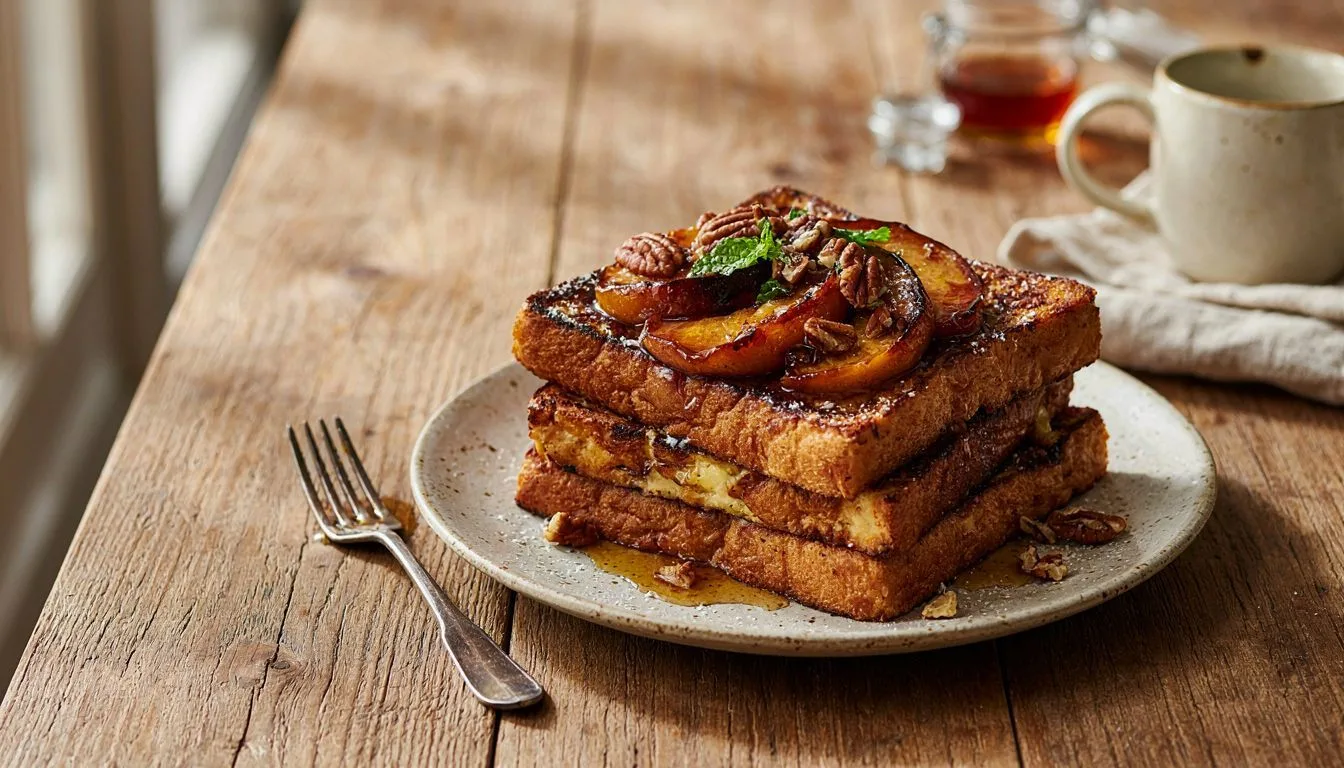
This sheet pan French toast recipe makes a golden-brown breakfast with minimal effort and no standing over the stove. Thick slices of bread soak up a spiced custard and bake on one pan for crisp edges and a tender center. It works for busy mornings, weekend brunches, or feeding a crowd without sacrificing flavor.
Origins and History of the Dish
Sheet Pan French Toast is a practical twist on a classic breakfast that combines the comforting flavors of traditional French toast with the convenience of oven baking. While French toast itself dates back centuries, with early versions appearing in ancient Roman cuisine, the sheet pan method reflects modern home cooking’s focus on efficiency and easy cleanup. Instead of standing over a skillet and cooking each slice individually, the bread is arranged on a baking sheet, soaked in a rich custard, and baked until golden and lightly crisp.
This approach became especially popular among busy families and brunch hosts because it can serve several people at once. Thick-cut bread, such as brioche, challah, or day-old French bread, works particularly well because it absorbs the egg-and-milk mixture without becoming overly soft. Cinnamon, vanilla, nutmeg, berries, or chopped nuts can add extra character, while maple syrup provides the traditional finishing touch.
A well-made Sheet Pan French Toast should have a tender, custardy center and lightly caramelized edges. It is an adaptable recipe for weekends, holidays, and meal preparation, offering the familiar warmth of French toast with far less hands-on cooking.
Ingredients
✓8 thick slices brioche or challah, about 1 inch thick
✓4 large eggs
✓1 cup whole milk
✓2 tablespoons maple syrup
✓1 teaspoon vanilla extract
✓1 teaspoon ground cinnamon
✓1/4 teaspoon ground nutmeg
✓1/4 teaspoon fine salt
✓2 tablespoons unsalted butter, melted
✓Fresh berries, for serving
✓Powdered sugar, for dusting
Instructions
1
Preheat your oven to 425°F (220°C). Lightly grease a large rimmed sheet pan with butter or nonstick cooking spray. For especially easy cleanup, line the pan with parchment paper before greasing it.
2
Slice a sturdy loaf of brioche, challah, or French bread into pieces about ¾-inch thick. Slightly stale bread works best because it absorbs the custard without becoming soggy.
3
In a large bowl, whisk together the eggs, milk, vanilla extract, cinnamon, nutmeg, salt, and maple syrup or brown sugar until smooth. Whisk thoroughly so the spices are evenly distributed throughout the custard.
4
Dip each bread slice into the custard, turning once to coat both sides. Let the bread soak for just a few seconds per side; the goal is a moist center with enough structure to hold its shape.
5
Arrange the soaked bread slices in a single layer on the prepared sheet pan. Leave a little space between the pieces so the hot air can circulate and the edges can turn golden.
6
Brush or drizzle the tops with melted butter. This adds richness and helps the French toast develop a beautifully crisp, golden surface as it bakes.
7
Bake for 12 to 15 minutes, or until the bottoms are golden and the centers are set. For a more evenly browned finish, carefully flip the slices halfway through baking and return the pan to the oven.
8
Remove the sheet pan from the oven and let the French toast rest for 2 to 3 minutes. Serve warm with maple syrup, fresh berries, powdered sugar, whipped cream, or a small pat of butter.
Tips and Serving Suggestions
- Use slightly stale, thick-cut bread such as brioche, challah, or French bread. It absorbs the custard beautifully without becoming overly soggy.
- Cut the bread into evenly sized slices so every piece cooks at the same rate and develops a consistent golden-brown finish.
- Whisk the eggs, milk, vanilla, cinnamon, and other custard ingredients thoroughly before soaking the bread. This helps distribute the flavor evenly.
- Avoid overcrowding the sheet pan. Arrange the slices in a single layer with a little space between them so the edges can brown and crisp.
- Line the pan with parchment paper and lightly grease it to make cleanup easier and prevent the French toast from sticking.
- Flip the slices halfway through baking for even browning on both sides. A light coating of melted butter can add extra richness and crispness.
- Serve the French toast warm with maple syrup, fresh berries, sliced bananas, powdered sugar, or a spoonful of whipped cream.
- For a make-ahead breakfast, prepare the custard and bread on the sheet pan several hours in advance, cover, and refrigerate. Let the pan sit at room temperature briefly before baking.
İlginizi Çekebilecek Diğer Konular


Subscribe
0 Yorum
En Yeniler